
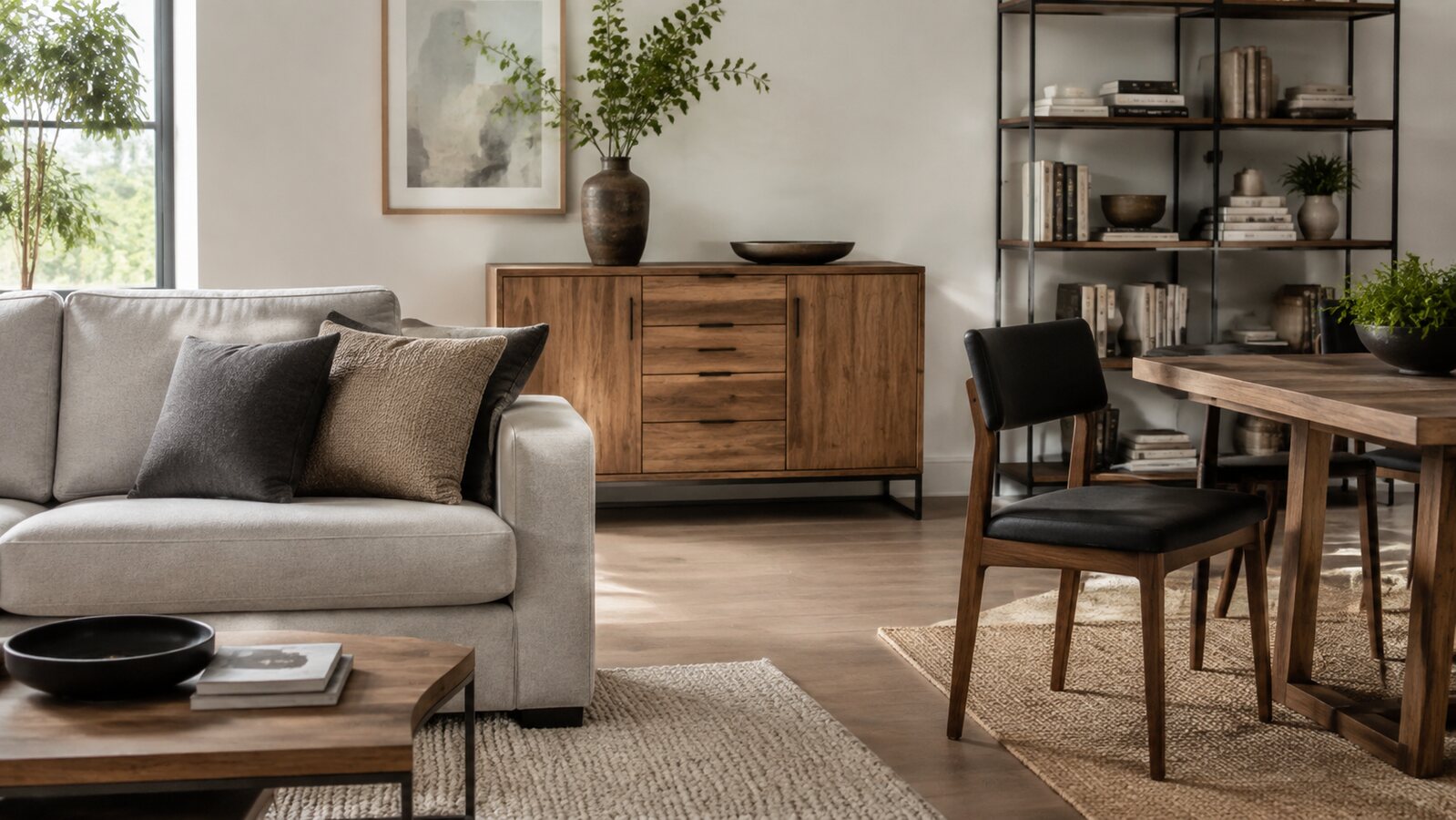
Storage furniture solves clutter only when its capacity, access, and visual scale fit the room. A large cabinet can hide many objects but may narrow circulation or encourage keeping items that are no longer useful.
Inventory contents before choosing capacity
Group what needs storage by size, frequency of use, weight, and whether it should be visible. Measure the largest objects and estimate realistic growth. Daily items belong at easy reach, while seasonal pieces can occupy higher or deeper compartments.
A practical step-by-step plan
- Remove duplicates and items that should be donated, recycled, or relocated.
- Measure the wall plus door, drawer, and walkway clearance.
- Choose internal dimensions for the actual objects, not generic shelf counts.
- Use closed fronts for visually mixed items and open shelves for active collections.
- Anchor tall units and level doors before loading.
Control visual weight
A cabinet close to wall color can recede, while a contrasting piece becomes a focal point. Raised legs reveal more floor but reduce low-level capacity. Shallow tall storage uses wall height efficiently, provided it is safely fixed and does not obstruct light.
Common mistakes to avoid
Buying containers and cabinets before editing possessions creates unnecessary volume. Deep shelves often hide small items behind one another. Avoid placing frequently used heavy objects above shoulder height.
Before you buy or begin
- Measure internal shelf depth and adjustable intervals.
- Check door and drawer operation in the taped footprint.
- Confirm floor level and anchoring requirements.
- Plan labels or categories before loading.
- Leave some spare capacity for normal change.
Final perspective
Effective storage makes retrieval and return easy. Choose furniture from the contents outward, and keep the room’s movement space visible in every decision.