
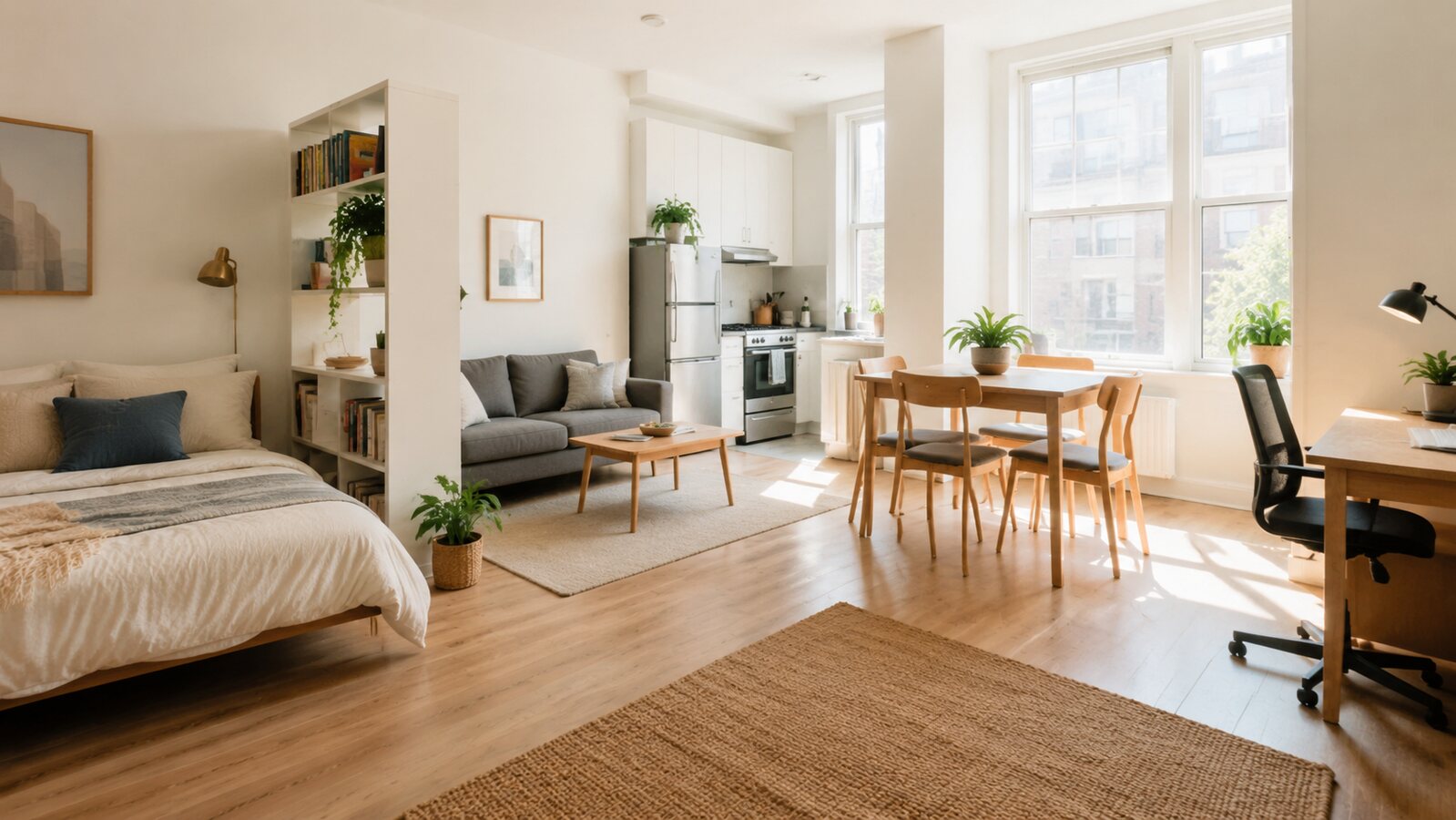
Using wall height can free floor area, but vertical storage must remain accessible, stable, and visually controlled. More shelves are not useful if everyday objects require unsafe reaching.
Separate daily reach from archive space
Keep daily items between knee and shoulder height. Reserve high shelves for light, infrequent objects in labeled containers. Heavy or fragile items belong lower. Any tall unit should follow manufacturer anchoring instructions.
A practical step-by-step plan
- Map blank wall areas without blocking switches, vents, or doors.
- Measure the tallest stored objects and group them by frequency.
- Choose closed storage for visually mixed items.
- Use a stable step stool only where it can be stored safely.
- Anchor shelving and respect load ratings.
Preserve light and visual balance
Tall furniture close to wall color appears quieter. Open shelves near windows may preserve light better than a solid side panel, but they require more editing. Leaving some empty shelf space prevents the room from feeling compressed.
Common mistakes to avoid
High daily storage causes constant inconvenience. Shelves above beds or seating need especially careful installation and object restraint. Avoid improvising fixings or exceeding weight guidance.
Before you buy or begin
- Identify wall construction before installation.
- Place heavy objects below waist height.
- Keep emergency and ventilation paths open.
- Check safe access to every shelf.
- Review stability after loading.
Final perspective
Vertical storage succeeds when height is used selectively. Put light, occasional objects high and protect convenient reach for daily life.