
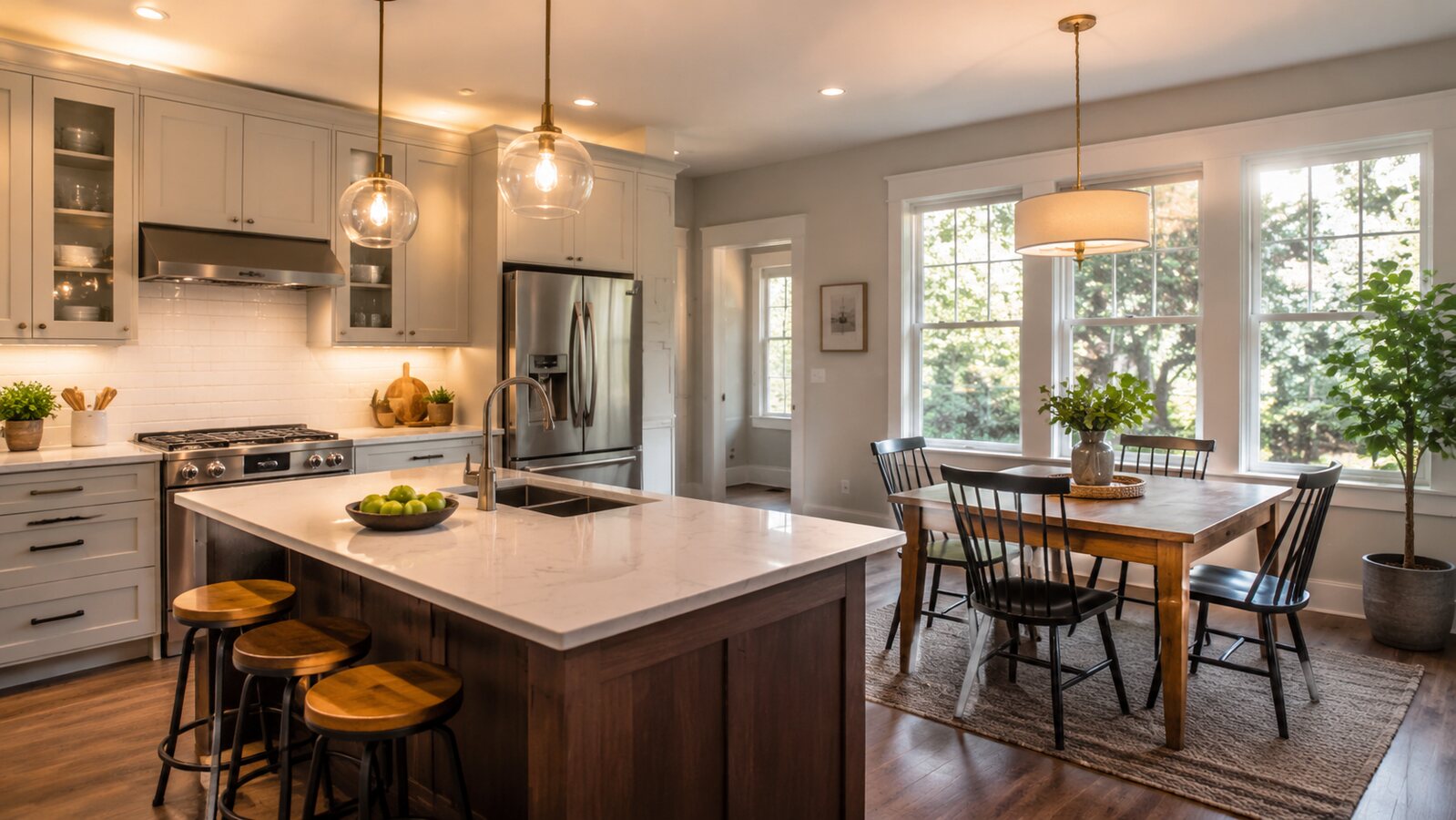
Dining storage should support meals while preserving comfortable circulation and visual calm. The right cabinet holds genuinely useful items near the table without becoming a destination for unrelated household overflow.
List meal-related contents and serving routines
Measure dishes, glassware, linens, serving pieces, and occasional appliances. Note which items travel from kitchen to table and where doors or drawers can open during a meal. Daily pieces deserve easier access than holiday sets.
A practical step-by-step plan
- Edit duplicates and rarely used items before calculating capacity.
- Tape the cabinet footprint and open-door zone.
- Use drawers for linens and small serving tools.
- Place heavy dishes on sturdy lower shelves.
- Reserve the top surface for serving or a limited display.
Choose depth and height for the room
A shallow sideboard preserves passage in a narrow room. Taller cabinets add capacity but carry more visual weight and require anchoring. Glass fronts suit orderly collections; solid doors are calmer for mixed contents.
Common mistakes to avoid
Furniture that fits the empty room may block movement when chairs are occupied. Overloading adjustable shelves risks sagging. Avoid tall unsecured cabinets and hot serving dishes on unsuitable finishes.
Before you buy or begin
- Measure occupied dining-chair positions.
- Check internal shelf dimensions and load guidance.
- Confirm anchoring and floor leveling.
- Protect surfaces from heat and moisture.
- Leave room for hands to lift heavy stacks.
Final perspective
Dining storage should shorten the path between setting, serving, and clearing the table. Keep its contents focused and its doors clear of seated guests.