
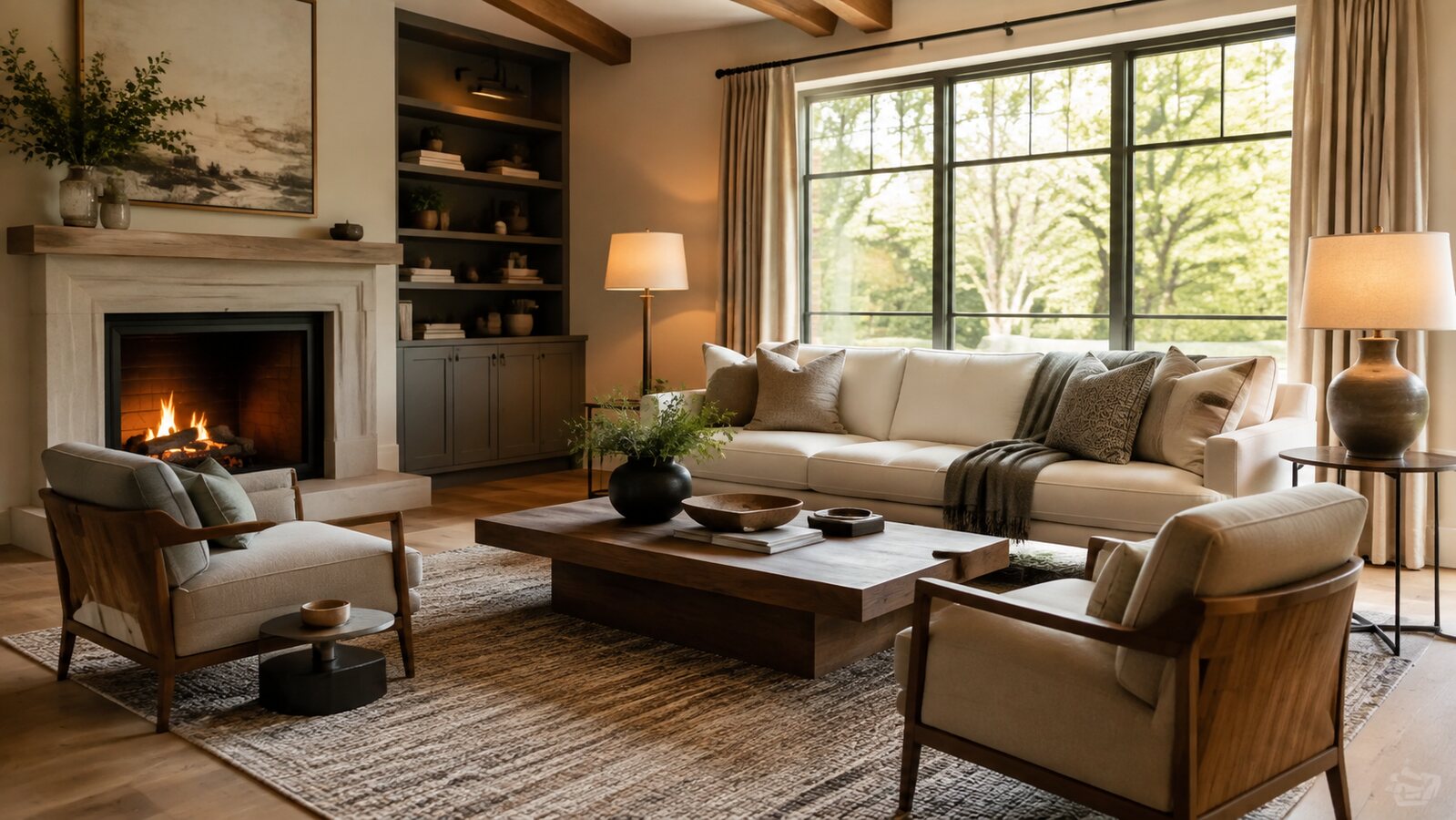
A coffee table must do several jobs at once: provide a useful surface, fit the seating proportions, and leave safe room to move. A beautiful table that is too high, too wide, or difficult to walk around quickly becomes a daily annoyance.
Start with the sofa and traffic pattern
Measure the sofa seat height, the length of the main seating edge, and the available space between furniture. A coffee table often works best near the seat height or slightly lower. The exact choice should reflect how the table is used, including meals, games, remote controls, or children’s activities.
A practical step-by-step plan
- Measure the clear floor area after the sofa and chairs are in their preferred positions.
- Leave a comfortable passage between the table and seating so people can stand without squeezing.
- Use an oval or round table where sharp corners interrupt a busy path.
- Choose a rectangular table for a long sofa and a square table for a compact, balanced seating group.
- Test the height with a temporary box before ordering.
Compare construction and storage
Solid wood can be repaired but needs protection from moisture. Veneer can offer stability and consistent appearance when well made. Glass feels visually light but shows fingerprints and requires safety-conscious edges. Lift tops add work or dining height, while shelves and drawers reduce surface clutter.
Common mistakes to avoid
Choosing by showroom appearance alone ignores the scale of the actual room. Very small tables leave seats without a reachable surface; very large tables restrict movement. Avoid unstable pedestal designs in homes where someone may lean on the edge, and verify that moving parts cannot pinch fingers.
Before you buy or begin
- Record sofa height and table clearance in centimeters or inches.
- Check product weight and whether delivery fits stairs and doors.
- Confirm edge treatment, glass safety specifications, and stability.
- Decide what must be stored and measure those objects.
- Use coasters or protective pads appropriate to the finish.
Final perspective
A coffee table should quietly support the room rather than dominate it. Correct height, safe clearance, and a shape that respects traffic are more important than a trend.