
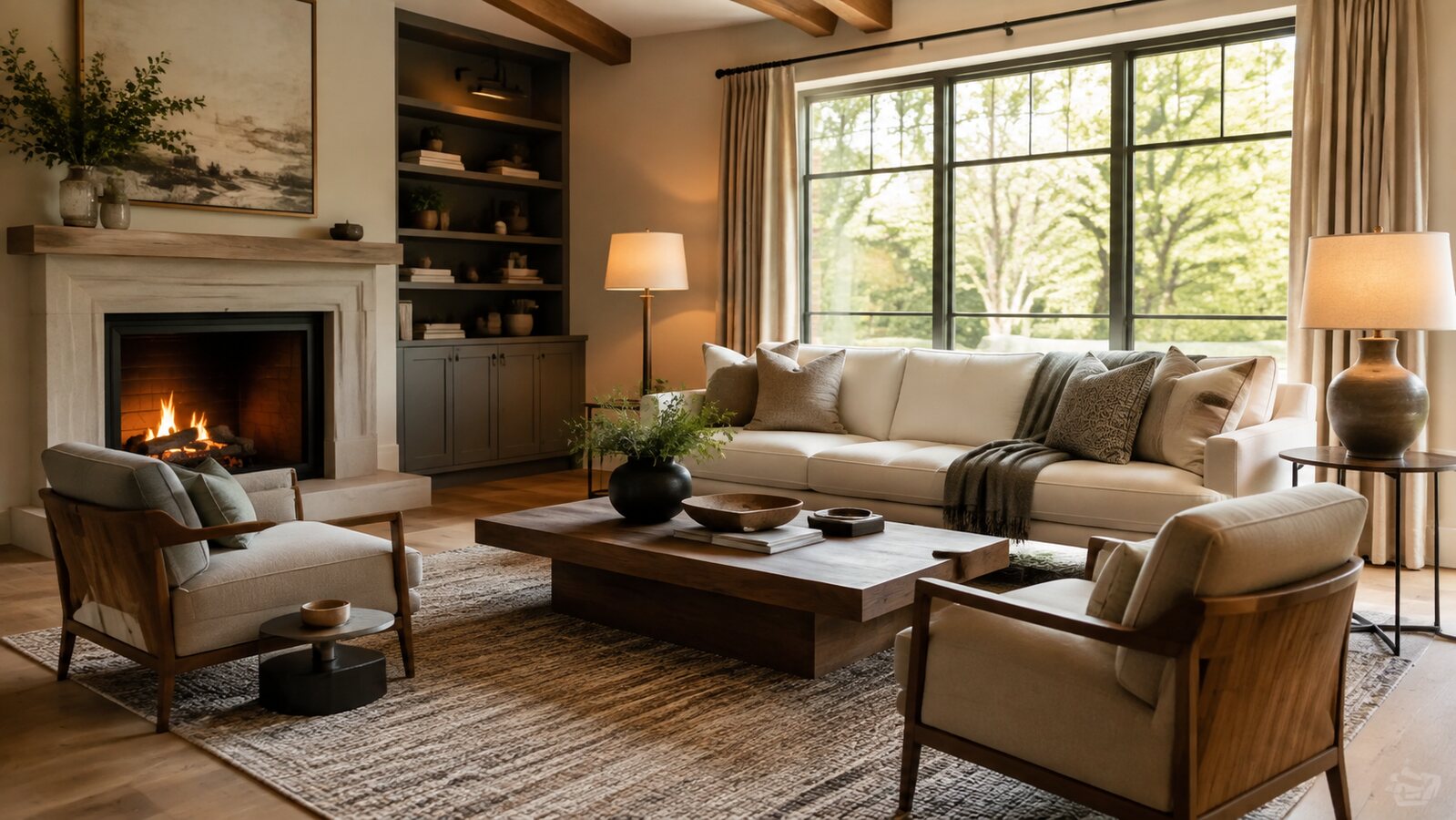
Television placement affects comfort, glare, furniture layout, and the visual mood of a living room. The goal is a screen that can be viewed comfortably while allowing the room to remain useful for reading, conversation, and everyday movement.
Evaluate viewing distance, height, and reflections
Sit in the main viewing positions and note direct reflections from windows and lamps. Screen size, resolution, and personal vision affect comfortable distance, so manufacturer guidance is a starting point rather than a universal rule. The middle of the screen should not require prolonged upward neck extension.
A practical step-by-step plan
- Identify the wall with the least disruptive glare and the clearest cable route.
- Mark the proposed screen outline with painter’s tape at seated eye level.
- Check views from every regular seat before drilling or purchasing a mount.
- Route power and signal cables safely; use a qualified electrician for new in-wall electrical work.
- Balance the screen wall with low storage, art, or shelving without blocking ventilation.
Integrate the television into a flexible layout
A swivel mount can serve an open-plan room, while a media console allows easier equipment changes. Darker wall colors reduce contrast when the screen is off, but adequate bias or ambient lighting can make evening viewing more comfortable. Arrange at least one chair to participate in conversation without facing the screen directly.
Common mistakes to avoid
Mounting too high above a fireplace is a common source of neck discomfort and heat concerns. Do not run ordinary power cords inside walls, overload outlets, or conceal equipment so tightly that it overheats. A screen centered on the wall may still be off-center from the actual seating.
Before you buy or begin
- Check the mount rating against the exact television model and weight.
- Confirm wall construction and appropriate anchors or studs.
- Plan ventilation and access to ports.
- Test daylight and nighttime glare.
- Keep cords secured away from children, pets, and walkways.
Final perspective
Good placement makes the screen easy to use and easy to ignore. Test the height and reflections first, then design the seating and storage around real routines.