
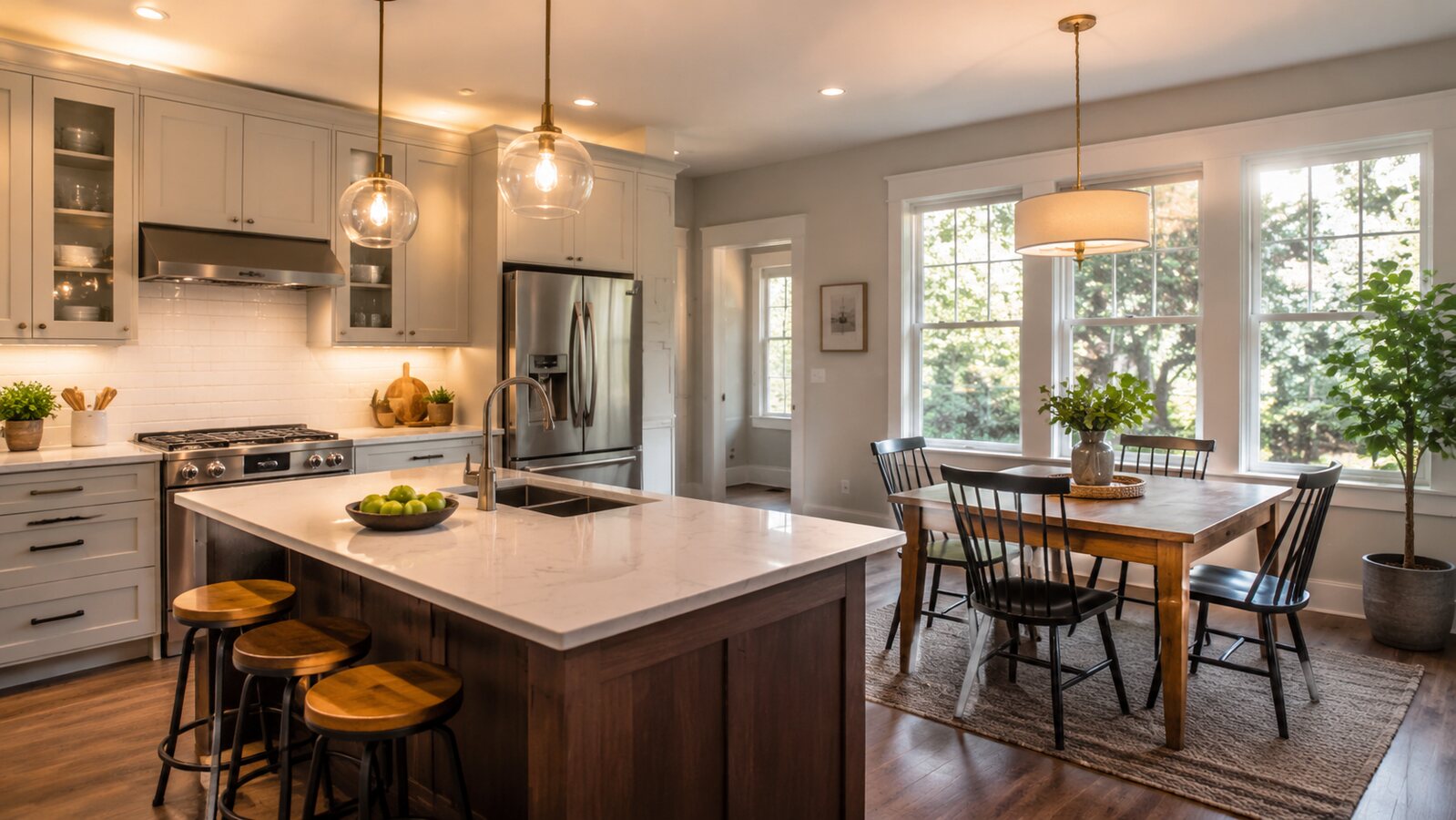
A functional kitchen reduces unnecessary steps between storing food, washing, preparing, cooking, and serving. Instead of forcing every room into a traditional work triangle, modern planning can use activity zones that reflect the actual cooks, appliances, and household routines.
Observe a normal meal before redesigning
Write down where ingredients begin, where packaging is discarded, which counter holds preparation, and where hot cookware lands. Bottlenecks often appear because tools are stored by appearance rather than by use. Preserve safe separation between raw-food preparation, clean dishes, and household traffic where possible.
A practical step-by-step plan
- Create a food-storage zone near the refrigerator and pantry.
- Keep knives, boards, mixing tools, and a clear counter together for preparation.
- Store pots, utensils, and heat-safe landing surfaces near cooking appliances.
- Place everyday dishes near the dishwasher or drying area.
- Move rarely used equipment out of prime waist-to-eye-level storage.
Protect clearances and safe movement
Open appliance doors, drawers, and cabinets while measuring. Two facing doors may each fit separately but collide when used together. Keep handles, combustible materials, and loose cords away from heat. Major gas, electrical, ventilation, or plumbing changes should be designed and completed by qualified professionals.
Common mistakes to avoid
Adding storage without considering reach can hide items in unusable corners. An oversized island may reduce rather than improve workflow. Avoid placing a primary walkway directly through the hot cooking zone, and do not sacrifice task lighting over preparation surfaces.
Before you buy or begin
- Measure open doors as well as cabinet bodies.
- Keep a heat-safe landing area beside cooking appliances.
- Check ventilation and manufacturer clearance requirements.
- Place cleaning products away from food and children.
- Test the plan with more than one household member.
Final perspective
A useful kitchen is organized around repeated actions. Map those actions, remove crossing routes, and keep the most-used tools close to the task they support.