
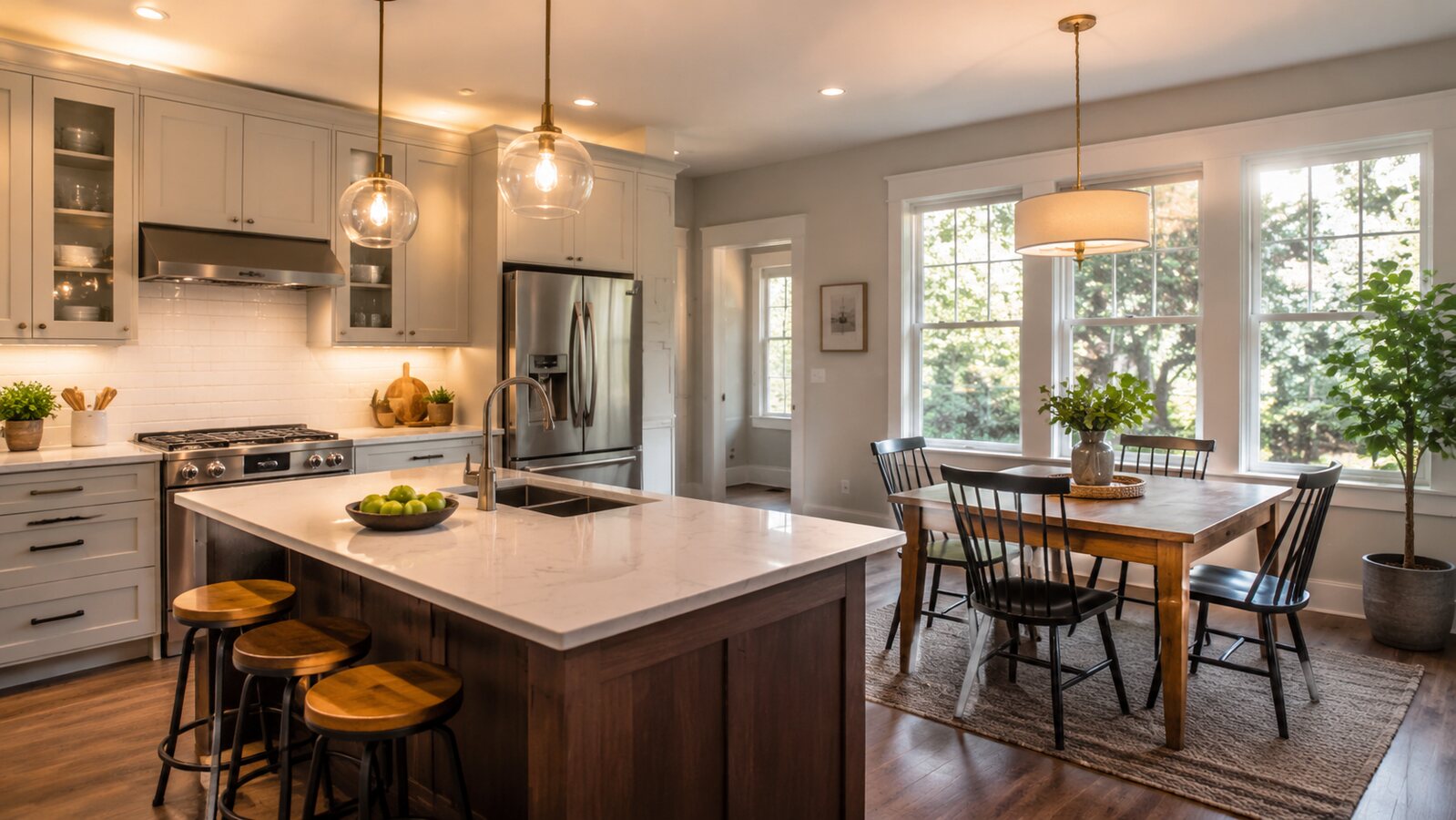
Open kitchen shelves can make everyday dishes easy to reach and give a small room visual depth. They also expose items to dust, cooking residue, and clutter, so they work best when used selectively.
Choose the right wall and contents
Shelves near heavy frying or an exterior door require more cleaning. Use open storage for attractive items that are reached and washed regularly: everyday bowls, cups, plates, or sealed dry goods. Keep fragile heirlooms, infrequently used appliances, and greasy cookware behind doors.
A practical step-by-step plan
- Inventory the items intended for display and measure their height and weight.
- Confirm wall construction and use fixings rated for the loaded shelf.
- Set shelf depth so objects fit without obstructing the work surface.
- Leave visual breathing room instead of filling every centimeter.
- Create a simple cleaning schedule for shelves and displayed items.
Build a stable visual arrangement
Repeat a few colors or materials and distribute heavy-looking objects across the span. Place frequently used pieces on lower shelves. Shelf thickness and bracket design should be chosen for actual load and span, not only appearance; seek professional guidance where wall structure is uncertain.
Common mistakes to avoid
Overloading long shelves can cause sagging or fixing failure. Tiny decorative objects collect dust and create visual noise. Avoid placing open shelves where heads may strike them or where steam and grease are unavoidable.
Before you buy or begin
- Calculate the weight of dishes at full capacity.
- Check fixing requirements for masonry, studs, or hollow walls.
- Keep breakables away from active edges.
- Measure the tallest object before setting vertical spacing.
- Retain some concealed storage for less attractive essentials.
Final perspective
Open shelving is most practical when it holds a small working collection. Safe installation, regular use, and intentional empty space matter more than a perfectly styled display.