
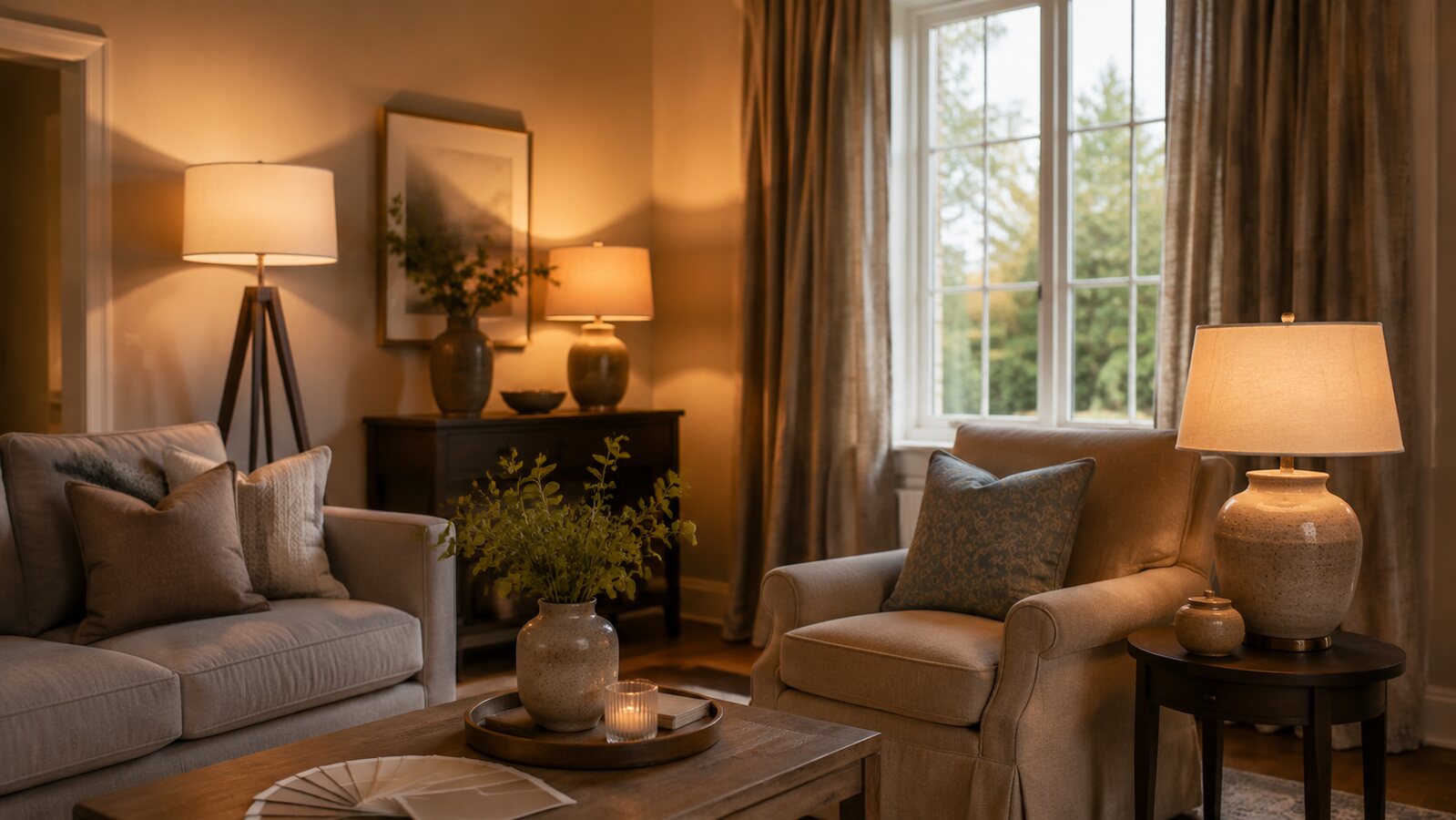
A paint color rarely appears in isolation. Flooring, stone, wood, upholstery, daylight, and bulbs can reveal warm, cool, green, pink, or gray undertones that were not obvious on a small sample.
Begin with elements that will not change
Collect accurate samples or photographs of flooring, countertops, cabinets, and major upholstery. Compare paint candidates beside those fixed elements rather than against a white phone screen. Large movable samples show undertones more clearly than tiny chips.
A practical step-by-step plan
- Identify whether fixed materials lean warm, cool, or relatively neutral.
- Choose several related paint candidates instead of one immediate favorite.
- Place large samples on multiple walls and near fixed finishes.
- Observe them in morning, afternoon, and artificial light.
- Select sheen based on surface condition, cleaning needs, and room use.
Use neutrals as colors, not blanks
White, beige, taupe, and gray all carry undertones. A cool gray beside warm wood may make both feel stronger. Repeating a floor undertone lightly in paint can create continuity, but contrast can also work when clearly intentional and supported elsewhere.
Common mistakes to avoid
Online renderings and store lighting cannot predict a room. Testing only one wall misses directional daylight. Avoid painting the entire space before checking evening light and compatibility with curtains and large furniture.
Before you buy or begin
- Use samples large enough to compare from across the room.
- Move samples rather than painting many permanent patches.
- Check trim and ceiling color at the same time.
- Review manufacturer preparation and coverage instructions.
- Record brand, line, color code, sheen, and batch details.
Final perspective
Undertones become manageable when paint is tested beside the room’s fixed materials in real light. Sampling is part of the decision, not an optional extra.