
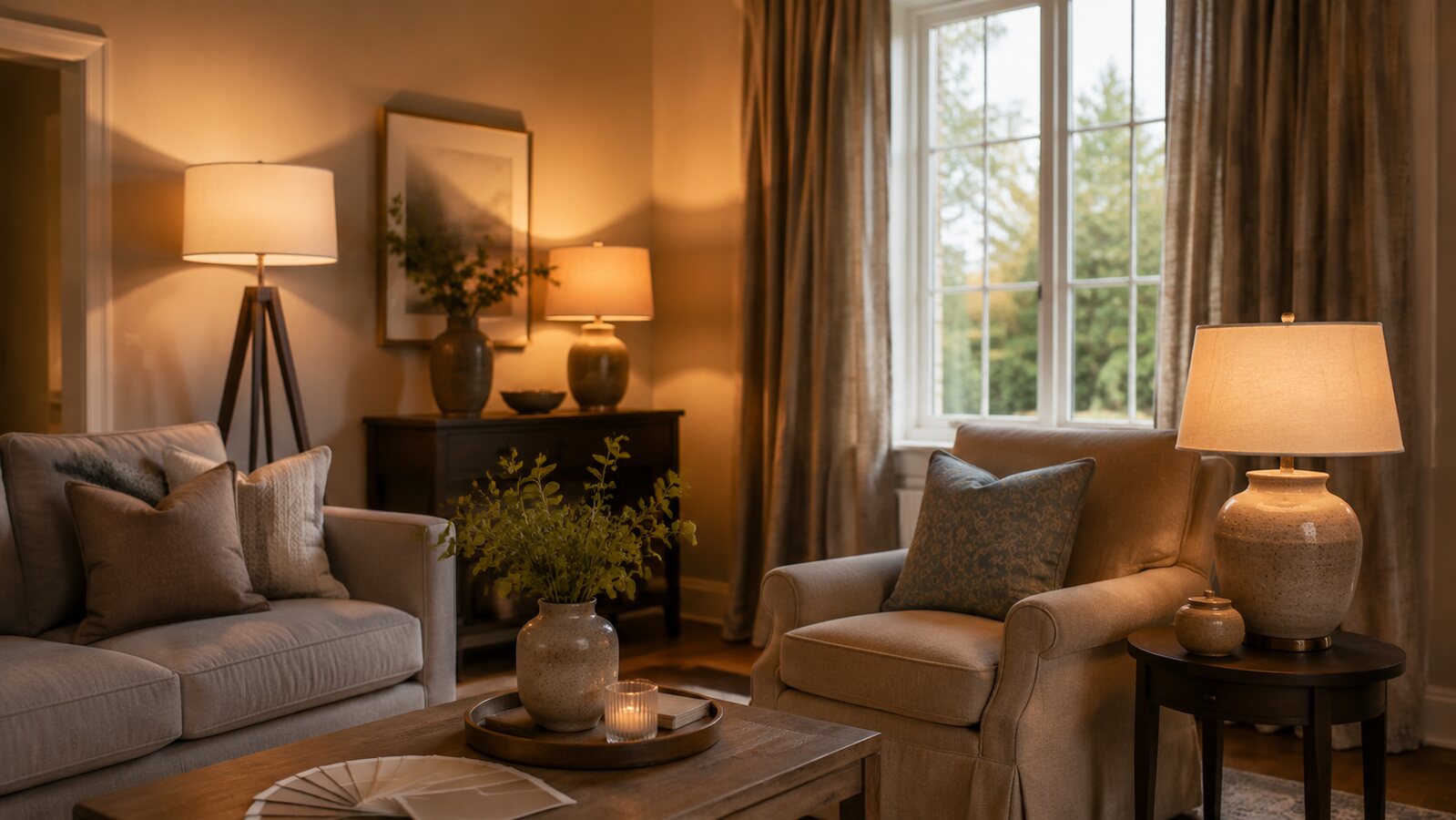
Curtains, shades, and blinds affect privacy, glare, temperature, acoustics, and the apparent size of a room. A useful window treatment begins with the problem to solve and the exact way the window opens.
Separate daytime and nighttime needs
Sheer fabric may provide limited daytime screening but usually does not guarantee privacy after dark. Layering a light-filtering treatment with an opaque curtain or shade gives more control. Solar exposure, neighboring views, and street lighting change needs across rooms.
A practical step-by-step plan
- Measure the opening, frame depth, handles, radiators, and nearby furniture.
- Decide whether mounting inside or outside the frame best supports coverage.
- Choose a light-filtering or solar-control layer for daytime glare.
- Add an opaque or blackout layer where nighttime privacy or darkness matters.
- Use child-safe cordless controls or compliant tensioning devices.
Plan fullness, length, and maintenance
Curtains need enough fabric width to close without appearing stretched. Floor-length panels can emphasize height, but kitchen and active areas may require shorter, easier-cleaning options. Review washing, shrinkage, sun fading, and hardware load before ordering.
Common mistakes to avoid
Mounting before checking handle clearance can prevent operation. A sheer alone may become transparent from outside at night. Avoid long loose cords and fabric touching heaters, cooking surfaces, or damp areas.
Before you buy or begin
- Measure at several points because openings may not be square.
- Check privacy from outside in both daylight and darkness.
- Confirm rod, track, and fixing load ratings.
- Consider condensation and airflow.
- Choose controls safe for children and pets.
Final perspective
Good window treatments work in layers and across the full day. Define privacy, light, heat, and safety requirements before choosing fabric.