
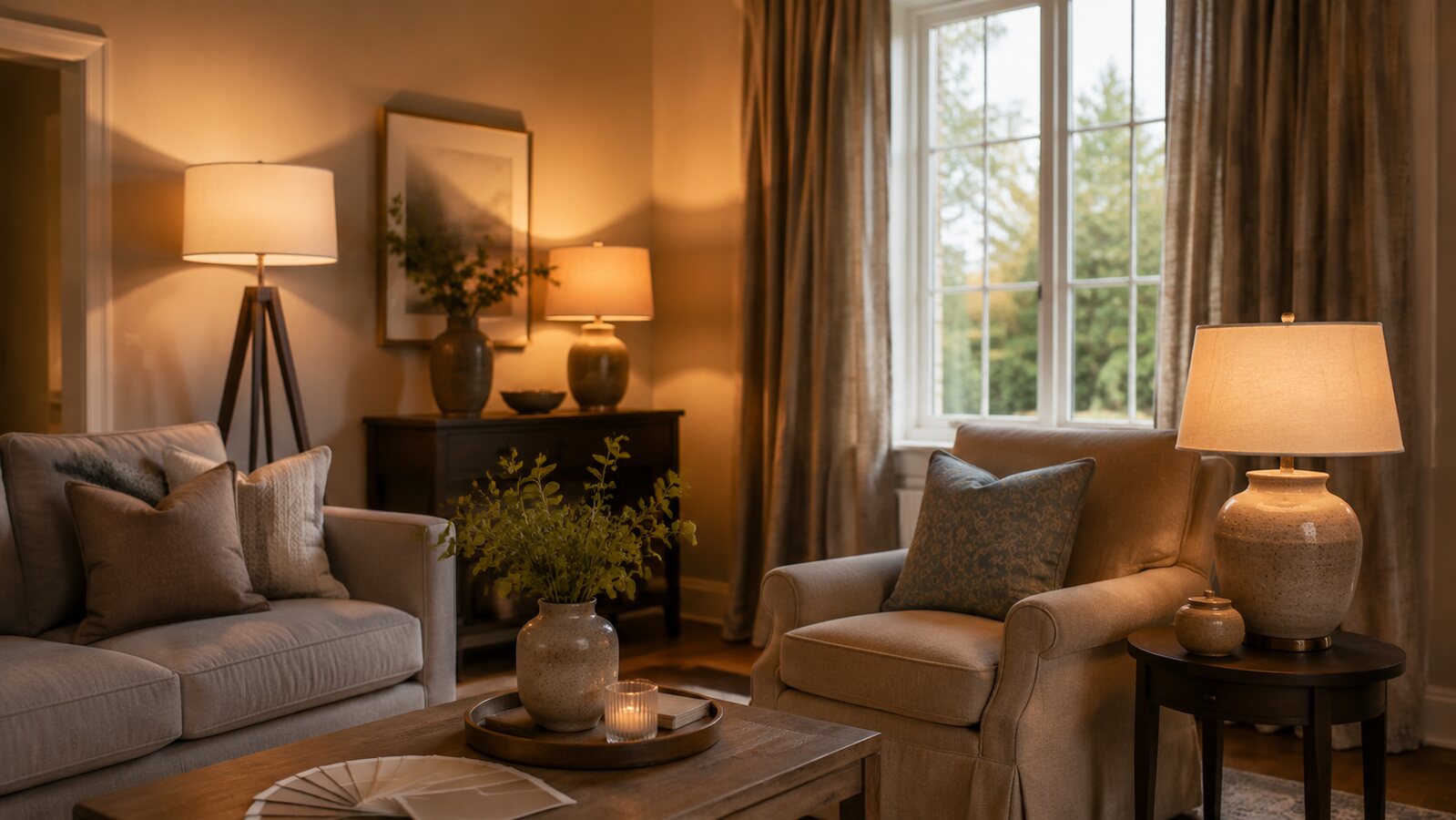
An accent wall works best when it reinforces architecture or a clear focal point. Using a random wall simply because it is easy to paint can make the room feel unbalanced and shorten the useful life of the design.
Choose a wall with a reason
Strong candidates include the bed wall, fireplace wall, dining backdrop, or a wall that naturally ends a sightline. Consider doors, windows, large televisions, and built-in storage. Sometimes painting the entire small room produces a calmer result than one disconnected dark rectangle.
A practical step-by-step plan
- View the candidate wall from the main entrance and seating positions.
- Test a large color or material sample in changing light.
- Repeat the accent color subtly in textiles, art, or accessories.
- Keep competing focal points limited.
- Use removable treatments when the room or preference changes frequently.
Select contrast that belongs to the palette
An accent can be darker, more saturated, textured, or simply a different material. It should relate to the floor, furniture, and surrounding wall undertones. Wallpaper scale must suit the viewing distance and wall interruptions.
Common mistakes to avoid
Selecting the first wall seen does not guarantee it is the visual anchor. Very high contrast can make a short wall appear even shorter. Avoid moisture-sensitive wallpaper, combustible materials near heat, or installations that ignore surface preparation.
Before you buy or begin
- Confirm the focal wall from multiple viewpoints.
- Compare samples with fixed finishes.
- Inspect wall condition and preparation needs.
- Estimate removal or repainting effort.
- Record leftover paint or wallpaper batch information.
Final perspective
A successful accent wall looks structurally intentional. Choose the focal point first, then use contrast that supports the entire room.