
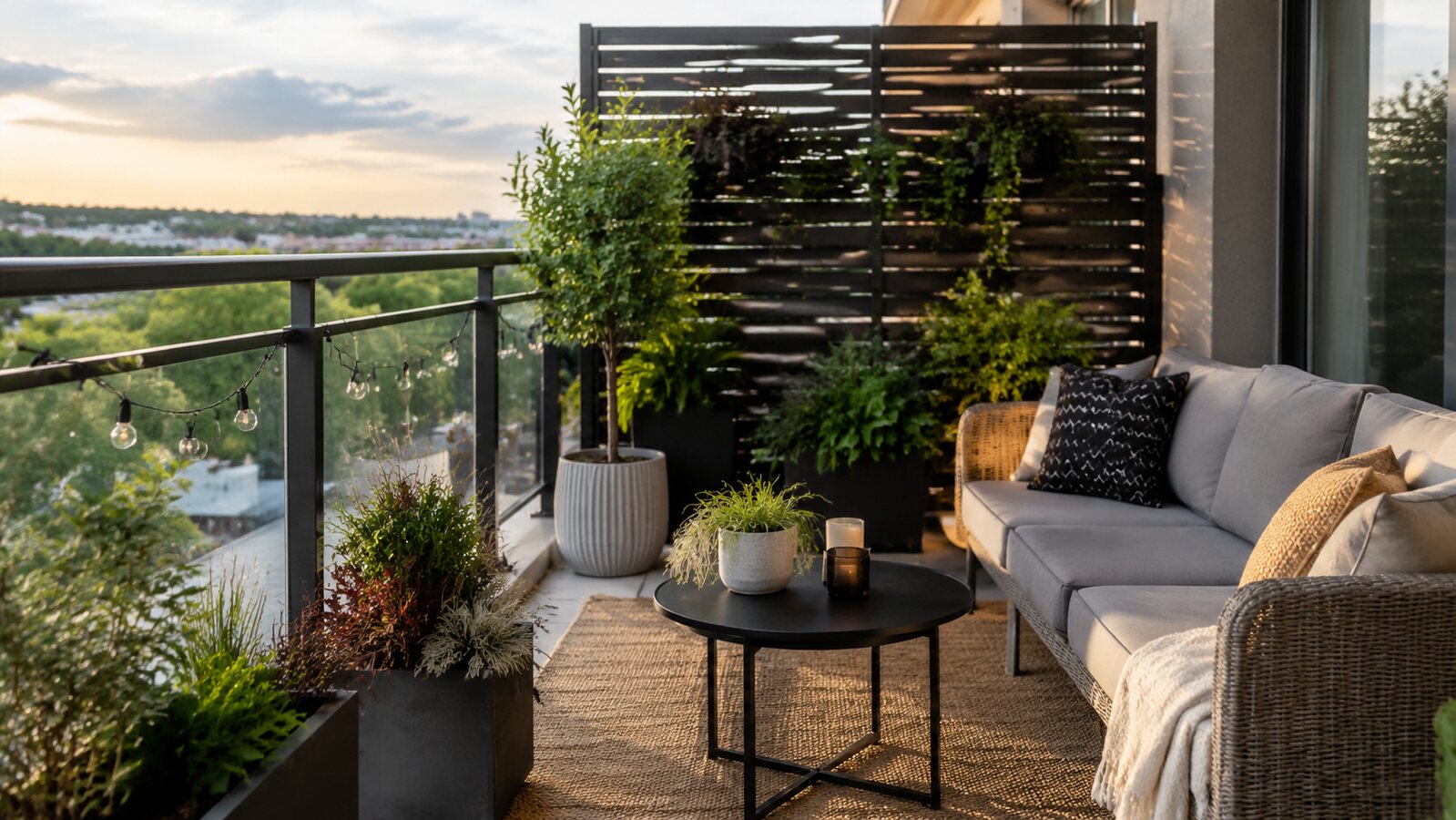
Balcony plants can add shade, privacy, and seasonal interest, but containers bring water, weight, wind, and maintenance concerns. Plant selection should follow the site’s actual light and exposure.
Observe light and wind over several days
Record hours of direct sun, reflected heat, prevailing wind, and rain shelter. A label such as full sun may not describe intense reflected heat beside glass or masonry. Choose plants suited to local climate and confirm whether any species is harmful to pets or children.
A practical step-by-step plan
- Review building rules for planters, drainage, and railing attachments.
- Choose containers with drainage and stable proportions.
- Use trays or systems that prevent water from affecting neighbors or the structure.
- Group plants with similar watering needs.
- Place heavy containers where they can remain rather than moving them frequently.
Plan weight, watering, and severe weather
Wet growing medium is much heavier than dry material. Structural concerns should be directed to building management or a qualified professional. Wind can dry plants quickly and overturn tall narrow pots. Use approved stable supports and move vulnerable items before storms.
Common mistakes to avoid
Rail-mounted containers can fall if incompatible with the railing or poorly secured. Overwatering without drainage damages roots and surfaces. Avoid allowing vines to attach to building materials without permission.
Before you buy or begin
- Confirm mature plant size, toxicity, and climate suitability.
- Calculate container access for filling and maintenance.
- Protect drainage while preventing runoff problems.
- Inspect supports after strong weather.
- Arrange care for travel and seasonal changes.
Final perspective
A balcony garden thrives when plants match the exposure and containers are managed as weight-bearing outdoor objects. Start small and learn the microclimate.