
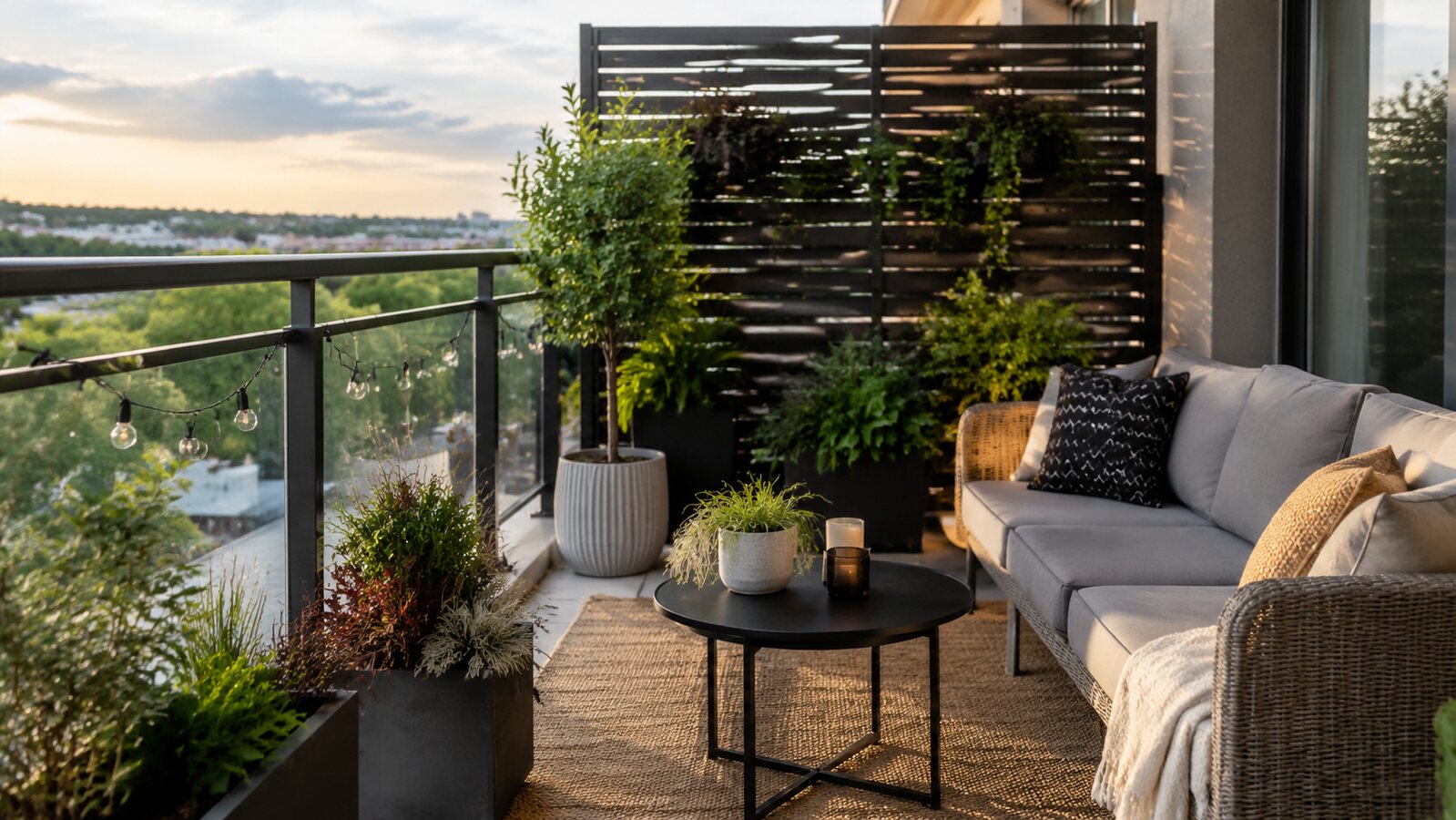
Outdoor lighting should improve safe movement and atmosphere without glare, exposed indoor-rated equipment, or cords crossing wet routes. Small spaces usually need less brightness than expected.
Light paths and tasks first
Identify the doorway, steps, seating, table, and any changes in floor level. Low, shielded light can reveal edges while keeping the night view comfortable. Permanent electrical work and new exterior outlets require qualified installation.
A practical step-by-step plan
- Use fixtures and connections specifically rated for the outdoor exposure.
- Place light near thresholds and level changes.
- Add a shielded table or wall light for dining and reading.
- Aim light downward and away from neighbors.
- Secure cords and equipment clear of water and foot traffic.
Control glare and weather exposure
Warm, moderate light usually feels comfortable in a small exterior area. Frosted covers and downward shades reduce visible bright points. Solar products depend on adequate charging light and battery condition; they should not be the only safety lighting on a critical route.
Common mistakes to avoid
Indoor extension cords and fixtures are unsafe outdoors. Excessive string lighting can create glare and attachment problems. Avoid placing hot fixtures near fabric, plants, or combustible material.
Before you buy or begin
- Verify outdoor and wet-location ratings.
- Check building rules and neighbor impact.
- Protect connections from water.
- Choose replaceable components when possible.
- Inspect fixtures and cords seasonally.
Final perspective
Outdoor lighting works best when modest and purposeful. Illuminate movement and tasks, then add atmosphere without compromising weather safety.