
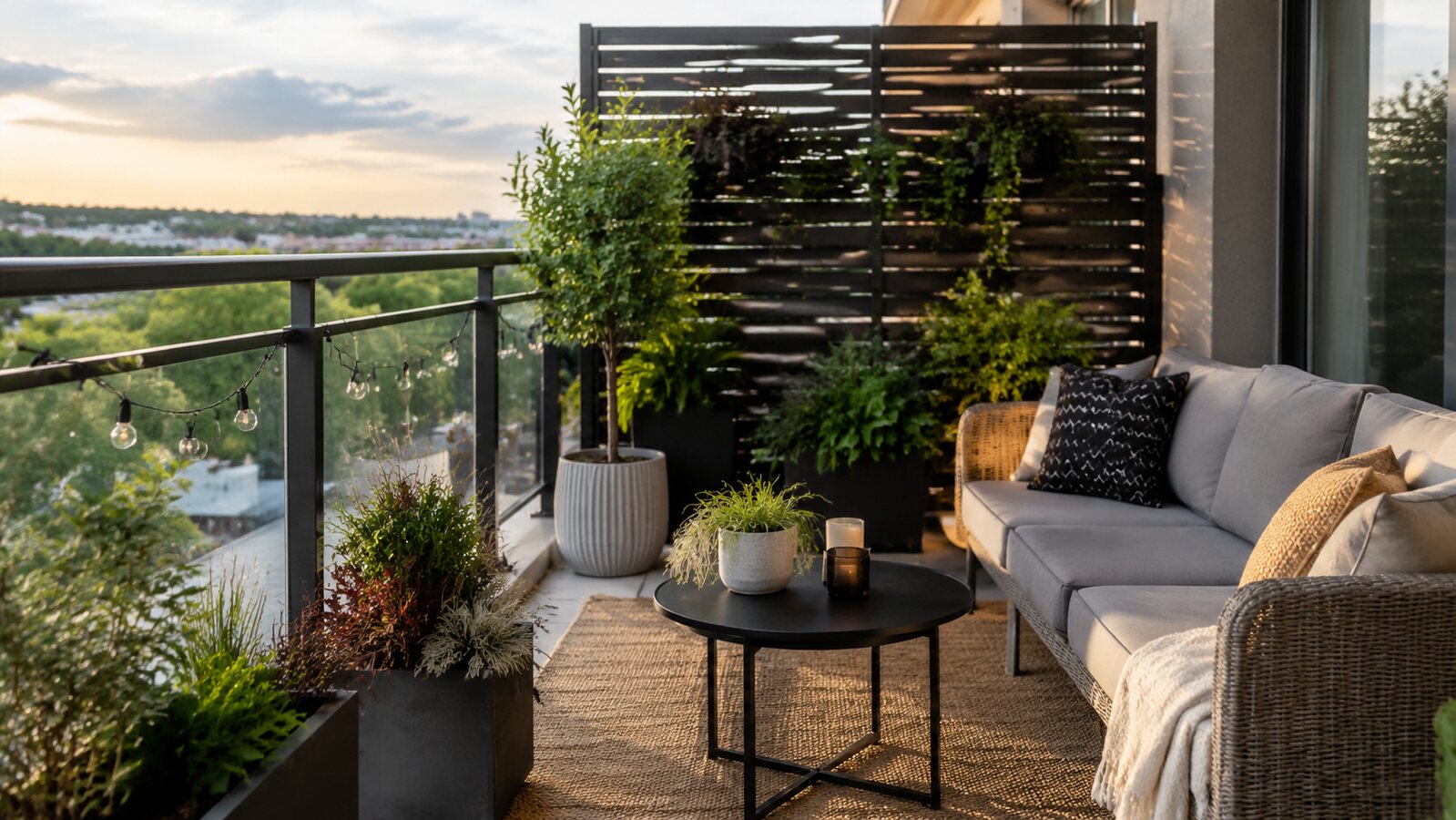
Balcony privacy should reduce unwanted views without creating a sail in strong wind, blocking required ventilation, or violating building rules. The safest solution begins with the direction of sightlines rather than covering every surface.
Map exactly where privacy is needed
Sit and stand in the positions used most often, then identify views from neighboring windows, walkways, and buildings. A targeted screen beside a chair may solve more than a full-height enclosure. Review lease and management rules before attaching anything.
A practical step-by-step plan
- Mark the specific sightlines from seated and standing positions.
- Use plants, freestanding panels, or approved outdoor fabric only within permitted dimensions.
- Preserve airflow, drainage, exits, and railing safety.
- Choose stable products rated for outdoor exposure.
- Remove or secure screens before severe weather.
Balance screening with daylight
Slatted panels and layered plants filter views while allowing more light than an opaque barrier. Light-colored outdoor textiles reflect more light into the interior. Plant choices should match exposure and must not create unsafe climbing opportunities near railings.
Common mistakes to avoid
Unapproved railing attachments can fail or damage shared property. Dense fabric can catch wind and reduce ventilation. Avoid heavy planters without considering wet weight and structural guidance.
Before you buy or begin
- Confirm written building restrictions.
- Test privacy from the relevant outside angle.
- Check wind loading and product instructions.
- Keep all safety and emergency routes clear.
- Plan seasonal storage and cleaning.
Final perspective
Effective privacy is targeted, stable, and reversible. Screen the real sightline while preserving the balcony’s light, airflow, and safety.