
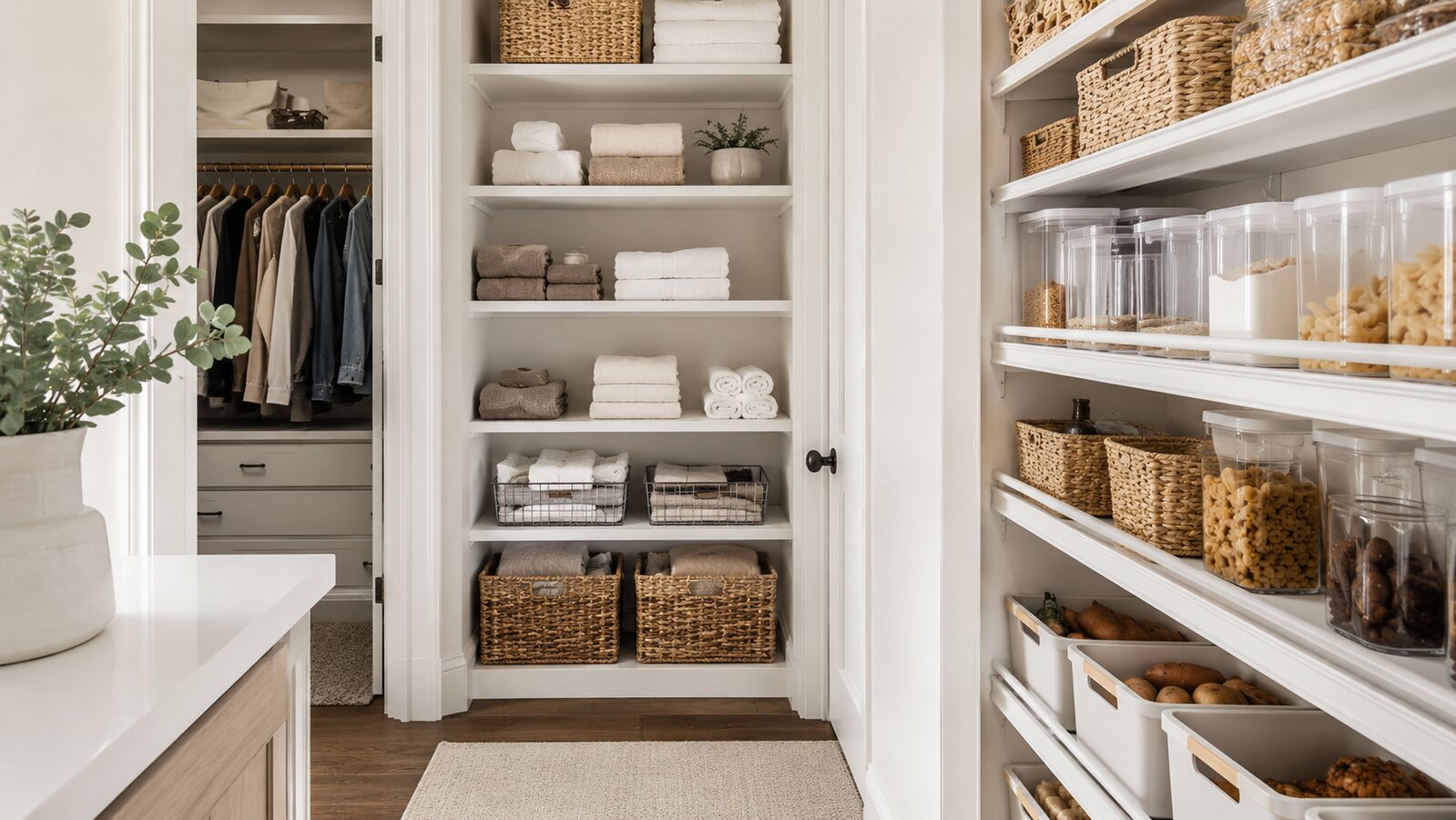
A linen closet often mixes bulky bedding, towels, toiletries, and cleaning supplies. Clear categories and realistic quantity limits prevent deep shelves from turning into forgotten inventory.
Assign shelves by use and frequency
Place frequently used towels and current-season bedding at comfortable reach. Store guest and seasonal sets higher. Keep chemicals separate from textiles and follow product safety instructions, especially in homes with children or pets.
A practical step-by-step plan
- Remove everything and clean the empty shelves.
- Match sheet sets and identify incomplete or damaged pieces.
- Group towels by size and household use.
- Use bins for small toiletries rather than loose rows.
- Label shelves so clean items return to the same zone.
Control moisture and deep shelves
Linens should be completely dry before storage. Ventilation helps prevent stale odors. On deep shelves, bins or trays keep rear items accessible; overfilled stacks tend to collapse and hide what is underneath.
Common mistakes to avoid
Saving excessive old towels for an undefined future consumes prime space. Scented products may affect sensitive users. Avoid storing damp fabric or incompatible chemicals together.
Before you buy or begin
- Set a practical number of sets per bed and person.
- Keep the next-use set at the front.
- Provide spill containment for toiletries.
- Inspect for moisture or pests.
- Donate usable excess through appropriate local channels.
Final perspective
A linen closet should make clean replacements quick to find. Limit quantities, separate risky products, and use containers only where they improve access.