
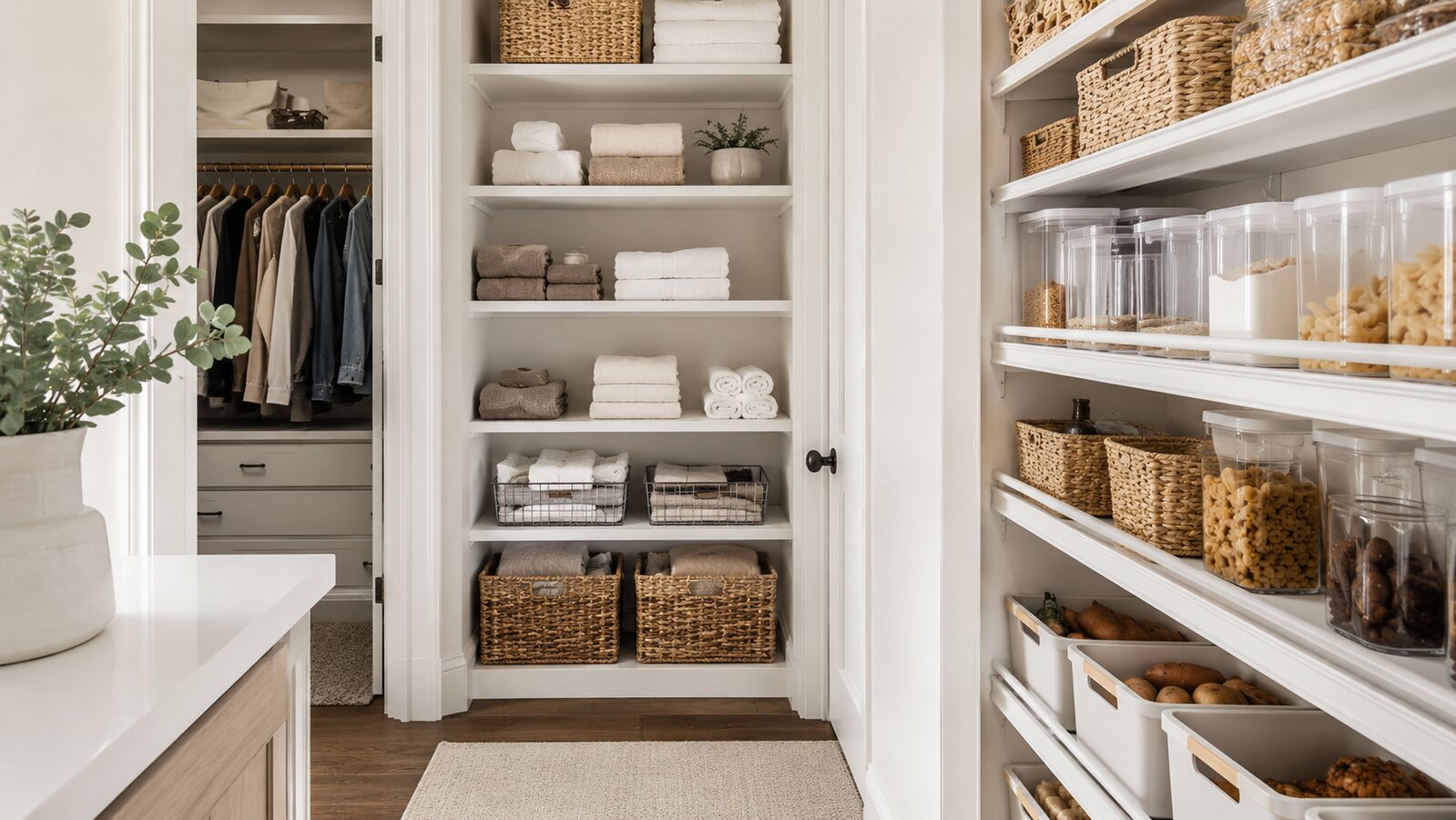
Closet organization is easier when it begins with what is worn, not with new containers. A routine-based method gives the most accessible space to frequent items and removes decisions from busy mornings.
Empty by category, not all at once
Work through shirts, trousers, shoes, or accessories separately so the room remains usable. Keep items that fit current life, need reasonable repair, or serve a defined occasion. Create clear destinations for donation, recycling, tailoring, and seasonal storage.
A practical step-by-step plan
- Track what is worn for two ordinary weeks.
- Remove damaged, duplicate, or unsuitable items by category.
- Measure hanging lengths, shelf depth, and usable height.
- Place daily clothing between waist and eye level.
- Create one return point for laundry, repairs, and donations.
Choose storage after editing
Matching hangers save visual space, but specialty organizers help only when they match the wardrobe. Shelf dividers control soft stacks, drawers suit small items, and labeled boxes serve genuinely seasonal pieces. Allow airflow and avoid compressing fabrics indefinitely.
Common mistakes to avoid
Buying bins first locks unnecessary possessions into the system. Very high daily storage creates friction. Avoid overloading rails or blocking ventilation with tightly packed clothing.
Before you buy or begin
- Measure the remaining collection.
- Keep daily outfits easiest to reach.
- Assign a maximum capacity to each category.
- Protect delicate materials appropriately.
- Schedule a brief seasonal review.
Final perspective
A sustainable closet mirrors the order of getting dressed. Reduce first, give each category a limit, and make returning items simpler than leaving them out.