
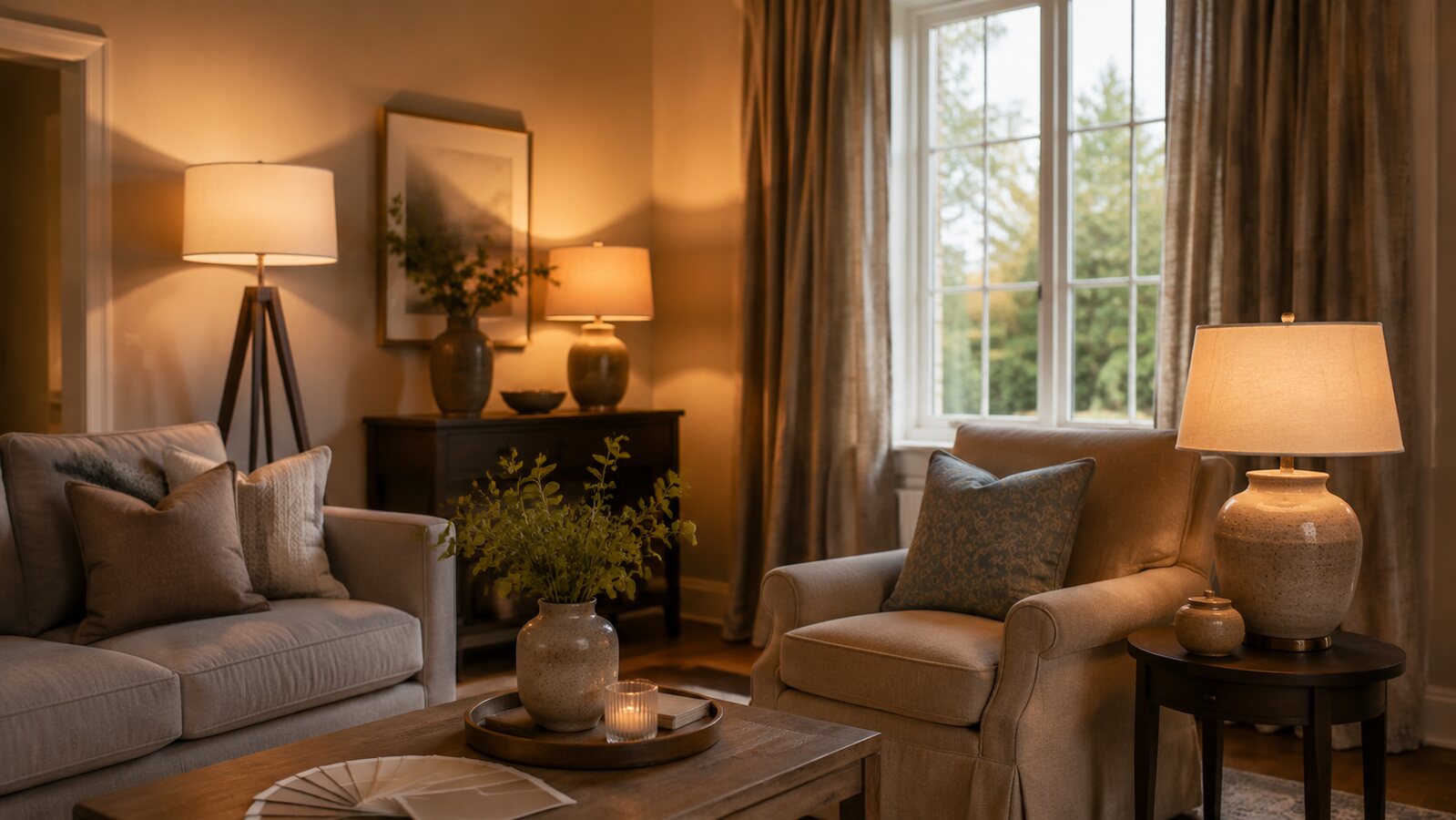
One ceiling fixture rarely provides comfortable light for every living-room activity. Layered lighting combines general illumination, task light, and softer accent light so the room can shift from cleaning and reading to conversation and evening relaxation.
List activities before choosing fixtures
Note where people read, watch television, work, play games, and walk through the room. Each activity has a different need. A bright central fixture may support cleaning, but a shaded floor lamp beside a chair gives more useful reading light with less glare.
A practical step-by-step plan
- Create a base layer with dimmable ceiling or wall lighting where the electrical system supports it.
- Add task lamps beside reading seats and work surfaces.
- Use accent lighting to reveal shelves, artwork, plants, or textured walls.
- Place lights at different heights to avoid a flat, overly uniform effect.
- Choose compatible bulbs and dimmers, and have electrical alterations completed safely.
Control color temperature and glare
Warm-white light generally suits relaxing spaces, while neutral light can help detailed tasks. Consistency matters: strongly different bulb colors in one sightline can make the room feel disjointed. Shades, frosted bulbs, and indirect light reduce exposed-point glare, especially when fixtures are near eye level.
Common mistakes to avoid
Buying fixtures before checking outlets and switch locations often creates visible extension cords. Excessively cool or bright bulbs can make a cozy palette feel harsh. Avoid lamps that tip easily in active households, and never exceed the fixture’s rated wattage.
Before you buy or begin
- Map outlets, switches, and furniture before shopping.
- Check bulb base, brightness, color temperature, and dimmer compatibility.
- Provide task light on the side that avoids casting a hand shadow.
- Hide or secure cords without placing them under rugs.
- Include at least one low evening-light option.
Final perspective
A flexible room uses several moderate light sources rather than one overpowering source. Plan around activities, control glare, and give each layer a clear purpose.