
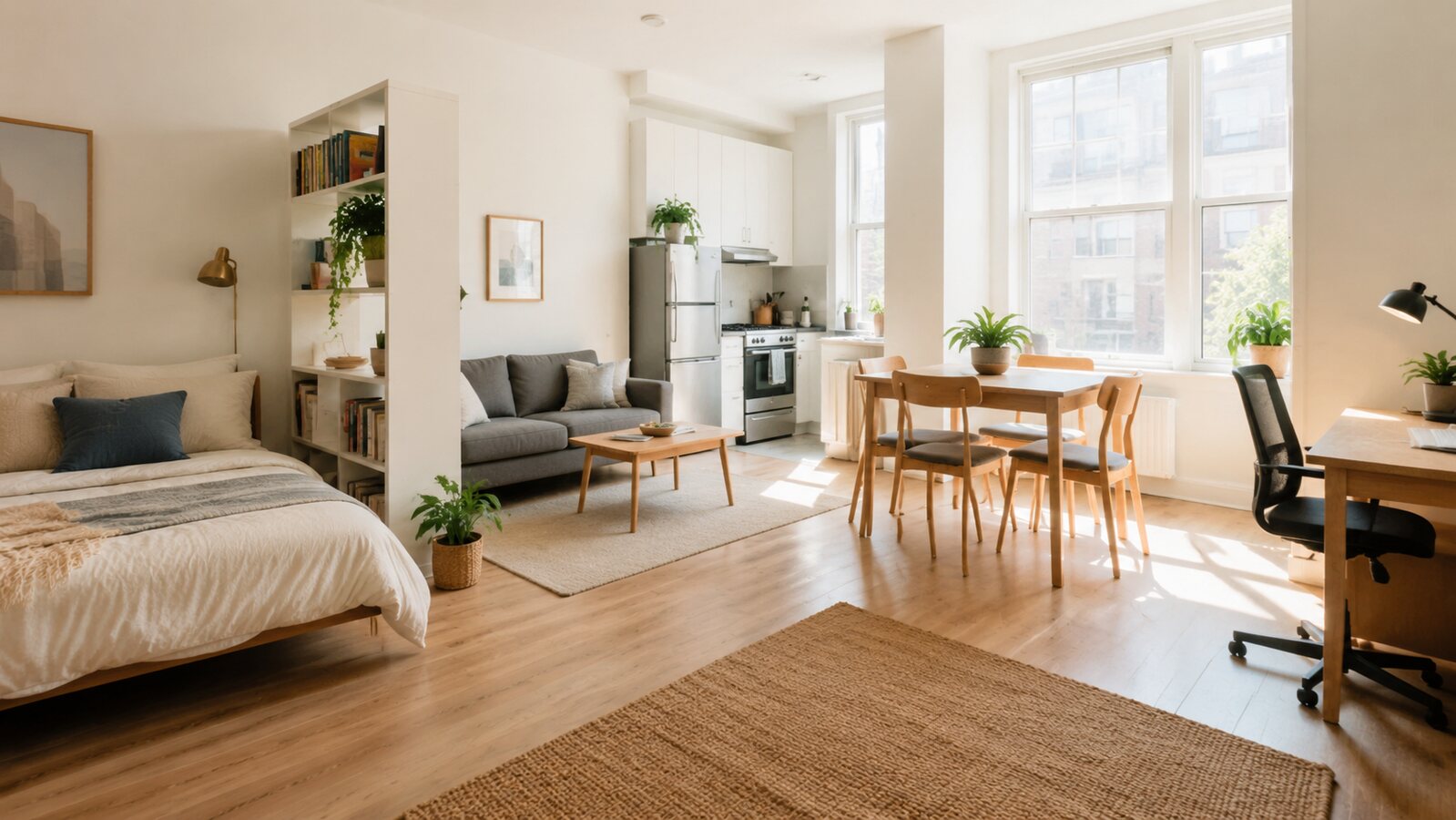
Mirrors can extend sightlines and reflect daylight, but they can also multiply clutter, expose private views, or create glare. Placement should be tested from standing and seated positions before anything is mounted.
Choose what the mirror will reflect
A mirror is most effective when it reflects a window, artwork, plant, or calm section of the room. Reflecting an open closet or crowded counter doubles the visual noise. Track direct sun and strong lamps through the day to avoid uncomfortable flashes.
A practical step-by-step plan
- Stand where the mirror will be viewed most often and identify the intended reflection.
- Tape a paper outline to test size and height.
- Check morning and afternoon light for glare.
- Use safety-rated backing or professional installation for large, heavy pieces.
- Position the mirror so edges do not conflict with doors, switches, or furniture.
Match shape and frame to the room
A tall vertical mirror emphasizes height and supports dressing, while a wide mirror can broaden a narrow wall. Frameless designs feel quiet; substantial frames act like artwork. In humid rooms, choose materials and adhesives intended for that environment.
Common mistakes to avoid
Hanging a small mirror too high disconnects it from furniture. Leaning a heavy mirror without proper restraint can be dangerous. Avoid positioning mirrors where they surprise occupants at night or reveal unwanted views from outside.
Before you buy or begin
- Verify wall type, mirror weight, and fixing method.
- Inspect reflections from every doorway.
- Keep direct glare out of seated eye lines.
- Use safety film or appropriate glass where risk is higher.
- Plan routine cleaning access.
Final perspective
A mirror improves a small room when the reflection is useful and calm. Design the reflected view as carefully as the wall itself.